
Trea Turner’s response wasn’t typical in baseball—and that’s what makes it stand out. He opened up about his baseball origins in a meaningful confession that’s reshaping how fans perceive his on-field play. His resilience, determination, and willingness to do the small things—all begin to make more sense when viewed from a different perspective. What was once seen as mere effort now carries a deeper meaning, built on instincts honed during his years away from the baseball field. For Turner, it’s not just a small detail—it’s a crucial part of who he is as a player.
And when that perspective is understood, it sparks an intriguing thought: perhaps his unique style isn’t just different—it’s precisely what gives him an advantage others don’t.

In the high-stakes world of Major League Baseball, where raw athletic talent and polished mechanics often dominate the narrative, Trea Turner has long stood apart. The Philadelphia Phillies shortstop, known for his blazing speed, elite defense, and consistent production at the plate, rarely seeks the spotlight for anything beyond his on-field exploits. Yet in a recent candid conversation, Turner shared insights into his baseball beginnings that have prompted fans and analysts alike to reexamine the foundation of his game.
What emerged was not a tale of early dominance or a linear path through elite travel teams and showcases, but a story rooted in persistence, family support, and experiences that extended well beyond the diamond during his formative years.
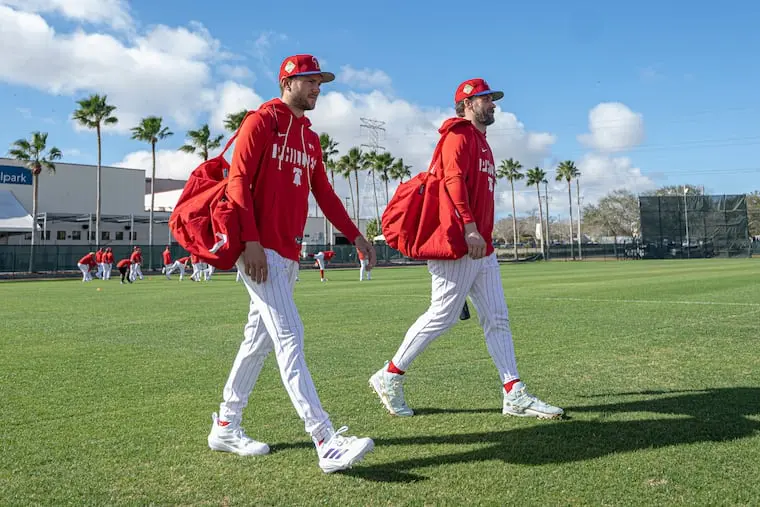
Turner’s journey began in Lake Worth, Florida, where as a young boy he fell in love with the game, swinging a bat in the front yard and dreaming of emulating heroes like Ken Griffey Jr. and Derek Jeter. He was not an overnight prodigy. Entering high school at Park Vista Community High, Turner was undersized—described by his coach as “5 foot nothing and 100 pounds soaking wet.” He started on the junior varsity squad, grinding through reps while his body caught up.
It was only in his junior year, after a significant growth spurt that took him to six feet tall, that his potential began to crystallize. Even then, college recruitment was limited; he received offers primarily from North Carolina State University and Florida Atlantic University.
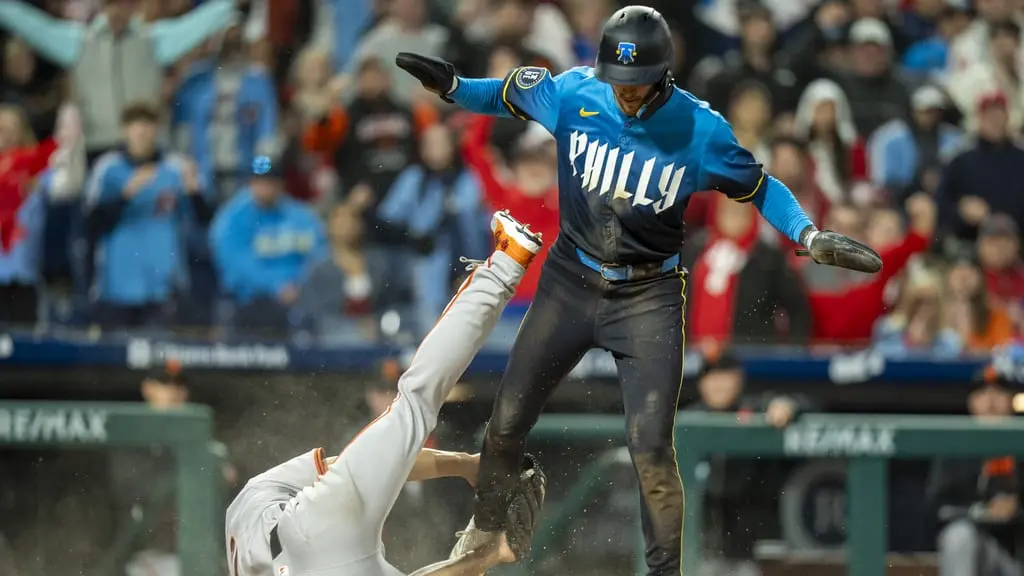
Rather than chasing the fastest route to professional baseball, Turner chose the road less traveled for many top prospects: college. Drafted in the 20th round by the Pittsburgh Pirates out of high school in 2011, he opted instead to attend NC State, where he not only played for the Wolfpack but also pursued a degree in chemical engineering. This decision reflected a mindset that prioritized long-term development over immediate gratification. At NC State, Turner exploded onto the scene, stealing a school-record 57 bases as a freshman while being caught just four times.
His speed was evident, but so was his willingness to embrace every aspect of the game—hustling on routine plays, perfecting bunts, and studying opponents with the analytical eye of someone who understood baseball as more than just athleticism.

Those college years away from the intense glare of professional scouting circuits were formative in ways that traditional prospects might never experience. Turner balanced rigorous academics with the demands of ACC baseball, honing instincts that went beyond mechanics. Chemical engineering coursework sharpened his problem-solving abilities, teaching him to break down complex systems into manageable parts—a skill that translates directly to reading pitchers, anticipating defensive shifts, and making split-second adjustments at the plate or in the field.
It was during this period, removed from the year-round baseball grind that many young talents endure, that he developed a deeper appreciation for the “small things” that define winning baseball: taking the extra base, executing a perfect relay throw, or laying down a sacrifice bunt when the situation demanded it.
This non-traditional path carried into his professional career. Selected 13th overall by the San Diego Padres in the 2014 MLB Draft, Turner signed and began his climb through the minors. A blockbuster trade soon sent him to the Washington Nationals, where he made his major league debut in 2015. From the outset, observers noted something distinctive about his approach. While many shortstops rely on flashy range or power, Turner’s game has always emphasized efficiency, anticipation, and relentless effort. His base-stealing prowess—rooted in those NC State instincts—combines raw speed with impeccable timing and reading of pitchers’ moves.
Defensively, he positions himself not just on athleticism but on study and preparation, turning potential singles into outs through smart routes and quick releases.
The confession Turner recently shared sheds new light on why his style feels so instinctive rather than manufactured. He spoke openly about how the years spent balancing academics and baseball, along with the patient growth through high school and college, instilled a resilience that transcends typical athletic narratives. In an era where many players enter the pros with polished swings forged in private facilities and travel ball circuits, Turner’s foundation includes the humility of being overlooked and the determination to maximize every opportunity.
That “meaningful confession” highlights how his willingness to do the unglamorous work—whether it’s extra defensive reps, film study, or maintaining focus during slumps—stems from a perspective shaped outside the conventional baseball bubble.
Fans have long admired Turner’s on-field demeanor: the smooth, economical swing that generates both contact and occasional power; the effortless acceleration from the batter’s box; the vacuum-like glove work at shortstop. What once appeared as simple hustle now reveals itself as something more profound. His resilience during the challenging early days with the Phillies in 2023, when a slow start drew criticism before a memorable fan-driven turnaround, mirrors the perseverance he built earlier in life.
The standing ovation he received that night, which his mother found deeply emotional, underscored a player who thrives not on entitlement but on earned respect and inner fortitude.
As Turner enters the 2026 season, this refreshed understanding of his origins reframes his unique advantages. In a sport increasingly dominated by launch-angle optimization and data-driven power, Turner’s approach—blending speed, contact hitting, and situational awareness—offers a counterpoint that feels almost anachronistic yet remarkably effective. His ability to use the whole field, adjust mid-at-bat, and contribute in ways that don’t always show up in highlight reels gives him an edge that pure power hitters or one-dimensional speedsters lack.
The instincts honed during those “years away from the baseball field”—in classrooms, weight rooms, and low-pressure college games—allow him to process the game at a higher level, anticipating scenarios before they unfold.
Teammates and coaches have long praised this quality. Turner’s leadership emerges not through vocal commands but through consistent example: sprinting out ground balls, backing up plays, and maintaining focus regardless of the score. In spring training discussions about offensive tweaks for 2026, he has emphasized pulling the ball with better backspin while preserving his all-fields approach, a balanced evolution that reflects his engineering-like mindset of continuous refinement.
This perspective invites a broader conversation in baseball. As the game evolves with advanced analytics and specialized training, players like Turner remind us that diverse paths can yield elite results. His story challenges the notion that the quickest route—early specialization, heavy travel ball—always produces the most complete athletes. Instead, Turner’s confession suggests that time spent developing character, intellect, and foundational habits away from constant baseball pressure can forge a mental and physical toughness that pays dividends over a long career.
For Phillies fans, this deeper appreciation enhances the enjoyment of watching Turner patrol shortstop and ignite the lineup from the top or middle of the order. His speed still thrills, turning routine singles into doubles and stealing bases with calculated aggression. His bat produces timely hits that shift momentum. But now, each routine play carries added resonance—a small thing elevated by the knowledge of where it originates.
In reflecting on Turner’s words, one can’t help but consider the broader implications for player development. Perhaps the sport could benefit from encouraging more prospects to pursue education or varied experiences alongside baseball. Turner’s success demonstrates that such a path doesn’t dilute talent; it enriches it, creating a player whose game is holistic rather than fragmented.
As the 2026 season unfolds, Trea Turner’s unique style will continue to captivate. What sets him apart is not just his statistics or highlight-reel moments, but the authentic foundation beneath them. His response to the game—grounded in a non-typical journey—proves that sometimes the most effective advantages are the ones quietly built over time, through determination and a willingness to embrace every facet of the athlete’s life.
In doing so, Turner doesn’t merely play baseball; he embodies a version of it that feels refreshingly human and profoundly effective, offering a blueprint that may inspire the next generation to value depth over speed in their own development.