
The Brisbane Broncos entered the 2026 season carrying both momentum and pressure. As defending premiers in the NRL, expectations around the club were naturally elevated, with many observers wondering whether they could build a new era of dominance similar to their golden periods in the 1990s. At the same time, the realities of a long and physically demanding rugby league season have quickly reminded everyone that sustained success requires not only talent, but also depth, resilience, and adaptability.
From a structural perspective, the Broncos remain one of the most historically significant clubs in Australian rugby league. Founded in the late 1980s and based in Brisbane, the team has accumulated multiple premierships and maintained one of the largest supporter bases in the competition. This legacy continues to shape expectations around the club, particularly when they are defending a title. However, history alone offers no guarantees in a competition as competitive as the modern NRL.
The early stages of the 2026 campaign have been defined by inconsistency. After beginning the season with high hopes, the Broncos experienced a difficult opening stretch, including heavy defeats that raised concerns about their defensive structure. Analysts pointed to lapses on the edges and a lack of cohesion under pressure as key issues that needed urgent attention. Despite these setbacks, the team demonstrated its potential in a notable comeback victory against the Melbourne Storm, where resilience and improved defensive organization helped secure an important win.
That performance suggested that, at their best, the Broncos remain capable of competing with the strongest teams in the league.
One of the defining narratives of Brisbane’s season so far has been the impact of injuries to key players. In recent weeks, the club has been forced to navigate a challenging period with several core members of the spine unavailable. Star fullback Reece Walsh is expected to miss multiple weeks following a facial fracture that requires surgery, while experienced playmaker Ben Hunt faces a significant layoff due to a knee injury. Captain Adam Reynolds has also been dealing with a groin issue, adding further uncertainty to the team’s playmaking structure.
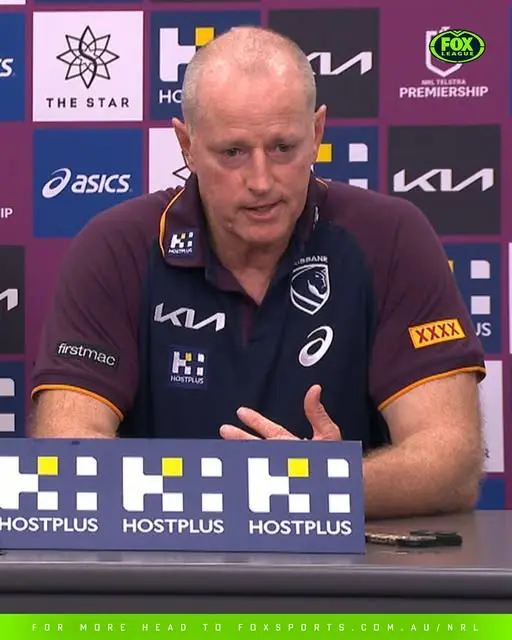
These absences have forced head coach Michael Maguire to consider alternative combinations, particularly in the halves and at fullback. Younger players such as Blake Mozer and Thomas Duffy have been discussed as potential solutions, reflecting the club’s reliance on emerging talent during this transitional phase. While such opportunities can accelerate development, they also test the team’s ability to maintain consistency under pressure, especially against experienced opposition.
Beyond injuries, there have also been off-field developments that have influenced the Broncos’ season. The resignation of assistant coach Ben Te’o, reportedly linked to internal disagreements over tactics, created an additional layer of disruption within the coaching structure. Although the club has emphasized stability and support for those involved, such changes can have subtle effects on preparation, communication, and overall team cohesion.
Another significant storyline concerns the future of key forward Payne Haas, who is set to leave the club at the end of the 2026 season. While his departure will not take effect immediately, the knowledge that one of the team’s most influential players is approaching the end of his tenure inevitably shapes long-term planning. It also places greater emphasis on maximizing the current season, as the Broncos seek to capitalize on their existing roster before further changes occur.
On the field, Brisbane’s strengths remain clear. The forward pack, anchored by players like Haas and Patrick Carrigan, continues to provide a strong platform through physicality and work rate. In the backline, when fully fit, the combination of Walsh, Kotoni Staggs, and emerging outside backs offers both speed and attacking creativity. The halves pairing, typically led by Reynolds and supported by Ezra Mam, has shown the ability to control matches through structured play and tactical kicking.
However, the current challenge lies in maintaining these strengths despite disruptions. The absence of key decision-makers has, at times, reduced the team’s attacking fluency and increased pressure on less experienced players. Defensive organization, particularly under fatigue, remains an area that requires ongoing attention if the Broncos are to compete consistently at the highest level.
The broader competitive landscape of the NRL in 2026 also adds to the complexity of Brisbane’s situation. Rival clubs have strengthened their squads and refined their systems, making it increasingly difficult for any single team to dominate across an entire season. This parity means that even small lapses in execution can lead to significant consequences, especially in tightly contested matches.
Looking ahead, the Broncos’ immediate focus will be on stabilizing their lineup and building continuity. The return of injured players will be crucial, not only for their individual contributions but also for restoring the team’s overall structure. At the same time, the experience gained by younger players during this period could prove valuable later in the season, particularly if the team faces further challenges.
There is also a psychological dimension to Brisbane’s campaign. As defending champions, they are often viewed as a benchmark by opponents, which can bring additional intensity to every match. Managing this pressure requires a balance between confidence and discipline, ensuring that the team remains focused on incremental improvement rather than external expectations.
In many ways, the 2026 season represents a test of the Broncos’ maturity as a team. Their ability to respond to adversity—whether through injuries, tactical adjustments, or off-field developments—will likely determine their success. While early inconsistencies have raised questions, the underlying quality within the squad suggests that they remain a genuine contender if they can achieve greater stability.
Ultimately, the story of the Brisbane Broncos this season is still unfolding. The combination of high expectations, structural challenges, and evolving dynamics creates a complex but compelling narrative. If the team can navigate this period effectively, they have the potential not only to defend their title but also to reinforce their position as one of the leading clubs in the modern NRL era.