
He’s An All-Australian, Two-Time Best & Fairest, Member Of The Indigenous Team Of The Century, Brisbane Lions Hall Of Fame Legend & Decorated Coach… But Michael ‘Magic’ McLean Had To Come Around To The Idea Of Joining The Sir Doug Nicholls Round Honourees – His ‘Surreal’ Feeling & Brutally Honest Admission That He’s ‘Envious’ Of Today’s Players Because Celebrating Indigenous Culture ‘Was Never A Thing When He Played’ Will Leave The Entire AFL World Speechless!

In the lead-up to the 2026 Sir Doug Nicholls Round, the AFL world has been given a powerful reminder of just how far the game has come – and how much one man quietly helped it get there. Michael “Magic” McLean, the Northern Territory pioneer whose 183-game career with Footscray and the Brisbane Bears/Lions helped blaze a trail for generations of First Nations players, has been named the official 2026 Honouree.
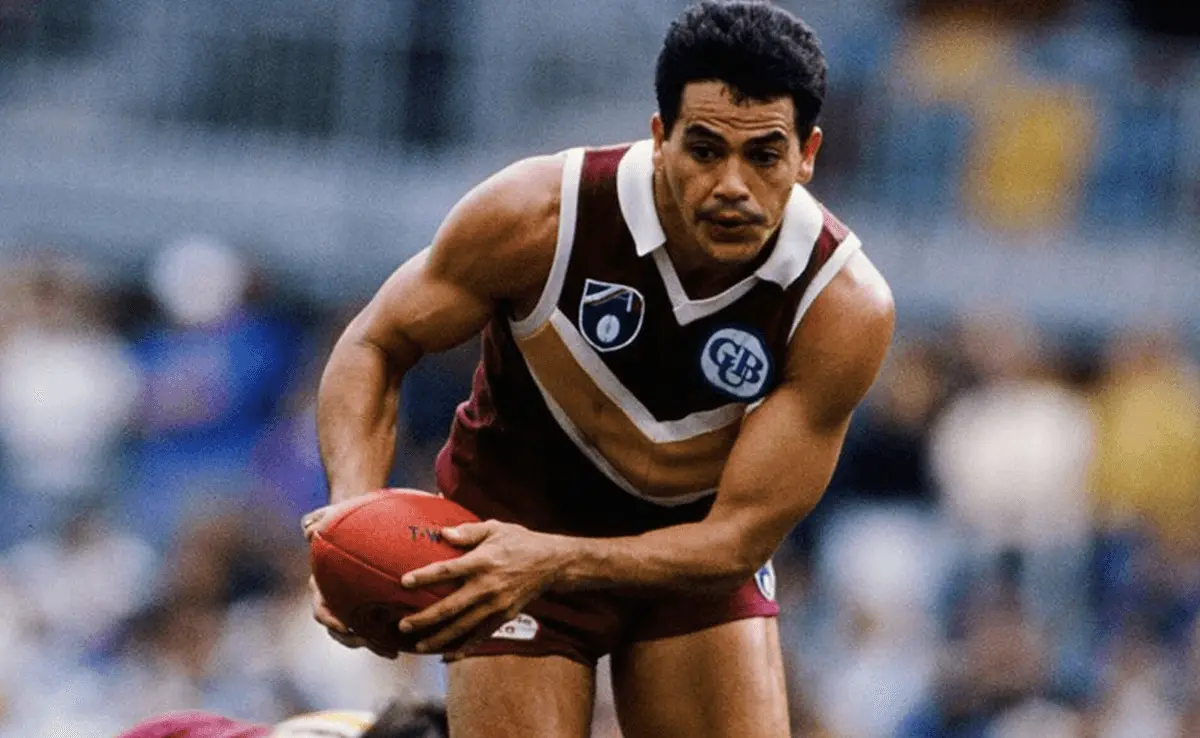
The announcement, made by AFL Commission Chair Craig Drummond earlier this year, was met with widespread acclaim. Yet for McLean himself, the honour took some time to sit right. “Pretty surreal,” he admitted in a recent interview with the National Indigenous Times. “I’m okay with it now, after reflecting on it.”
That quiet reflection reveals a man who has spent decades giving everything to the game while carrying the weight of being one of its true trailblazers. And in one brutally honest moment, he laid bare a feeling that will resonate deeply across the entire AFL community: he’s just a little bit envious of the players of today.
McLean’s journey began in Darwin, where the boy from Nightcliff quickly showed he was something special. At just 15 he was playing senior NTFL football. By 16 he was runner-up in the national under-16 carnival and named All-Australian. In 1983 he became the first Northern Territory First Nations player to be recruited directly into the VFL, signing with Footscray. The kid who cried on the plane leaving home would go on to play 95 games for the Bulldogs, earning the nickname “Magic” from teammates Doug Hawkins and Steven Knight – a moniker that has stuck ever since.
Injuries – including a brutal run of 16 operations – cut short what many believed could have been an even longer career at the Bulldogs. Delisted at 25, McLean returned to Darwin, rebuilt himself, and answered the call from Brisbane. In 1991 he joined the Bears and immediately made his mark, winning the club’s best and fairest in his first season. He repeated the feat in 1993, finishing fifth in the Brownlow Medal that year and establishing himself as one of the competition’s most respected leaders. Across 88 games in maroon he became a genuine club champion.
When the Bears merged to form the Brisbane Lions, he played one final game in 1997 before retiring.
His on-field resume is staggering: All-Australian, dual best and fairest winner, member of the Indigenous Team of the Century, and inductee into the Brisbane Lions Hall of Fame. Yet it is what he did off the field – and the price he paid to do it – that makes his story truly remarkable.
McLean was there in 1995 when the game confronted its darkest chapter. After being racially taunted during a match against Essendon, he stood shoulder to shoulder with Michael Long and others to help create the AFL’s groundbreaking Anti-Vilification Policy. “This is a human rights issue,” he told AFL executives at the time. The policy, now known as Rule 35, changed the game forever. But the scars remained. “They weren’t nice times when I look back,” he has reflected. “It made me angry and then when you reflect on it, really sad.”
Through it all, McLean played every single game for Brisbane “like it was my last.” That mindset – born of gratitude, resilience, and the knowledge that he was carrying the hopes of an entire community – defined his career.
Today, as the AFL prepares for Rounds 10 and 11 of the 2026 season, McLean’s name is being celebrated from Darwin to Melbourne. At the official Sir Doug Nicholls Round launch at Marvel Stadium on May 11, current First Nations stars lined up to pay their respects. The man they call Magic found himself surrounded by players wearing Indigenous guernseys, speaking openly about their Country, their culture, and what the round means to them.
And that is where the honesty cuts deepest.
“I envy today’s players,” McLean said plainly. “It was never a thing when I played. I just think it’s great – the jumpers, people talking about where they’re from, what it means to them. I never got that opportunity. So I’m a little bit envious, I suppose.”
Those words, spoken without bitterness but with unmistakable longing, have echoed across the football world. For a man who endured racial abuse, constant injuries, homesickness, and the pressure of being a pioneer, the sight of young Indigenous players openly celebrating their identity on the biggest stage is both beautiful and, in his own words, a little heartbreaking.
Yet McLean has never been one to dwell in the past. After hanging up the boots he dedicated nearly two decades to coaching in the Northern Territory, lifting wooden-spoon sides to premierships, helping establish the NT Thunder, and mentoring countless young players – including future stars like Andrew McLeod. He has worked in youth diversion, school engagement, and talent pathways, always with the same three Ds he learned as a boy: discipline, dedication, and desire.
His wife Linda, whom he met at 15 and married 33 years ago, has been his rock through every high and low. Together they have raised four children and are now proud grandparents to eight. Family, McLean says, remains his greatest achievement.
As the 2026 Sir Doug Nicholls Round unfolds, the AFL is not just honouring a champion footballer. It is honouring a man who helped make the game safer, fairer, and more inclusive for everyone who followed. The jumpers, the Welcome to Country ceremonies, the open expressions of pride – none of it existed in the same way when Magic McLean was lacing up his boots. That he can now watch it all unfold, even while admitting a quiet envy, speaks to a humility that has defined him his entire life.
The AFL world has been left speechless not because of what Michael McLean achieved on the field – though that alone is extraordinary – but because of the grace with which he has reflected on what he never had the chance to experience. In an era where Indigenous culture is finally being celebrated at the highest level, one of the game’s true pioneers has reminded us all how far we have come, and how much further we still have to go.